
How Smart Tech + Evidence-Based Strength Training Boosts Healthspan
- May 25, 2025
- 4 min read
Look—we get it. The gym can feel like a mystery.Machines you’ve never touched. People throwing weights around. Confusing advice online.
But here’s the truth: getting stronger doesn’t have to be complicated. You don’t need to be a bodybuilder or fitness pro. You just need a plan that works for you—and the right tools to back it up.
And guess what? The science now says you don’t even need heavy weights to make progress. With smart tech and the right strategy, you can build muscle, stay injury-free, and feel stronger doing real-life stuff—like walking upstairs, carrying groceries, or playing sports.
5 Key take aways from my recent research
1. Research Spotlight: Strength Protocols for Extending Healthspan
Strength training is essential—not optional—for aging populations. A global consensus and recent systematic reviews confirm that a multifaceted exercise regimen, including progressive resistance and functional strength training, is critical for extending healthspan, improving physical function, and reducing chronic disease risk in older adults1217.
Key takeaways:
Even single-set strength training programs can improve strength and endurance in older adults12.
Progressive resistance training (PRT) significantly increases muscle strength and bone mineral density, particularly in the femur and hip, and is especially effective for those with frailty, sarcopenia, or osteoporosis217.
Functional training at 70–85% of one-repetition maximum (1RM) is recommended for building capacity for daily activities and enhancing independence1217.
Power training—focusing on faster concentric reps at moderate loads—yields greater improvements in physical function and neuromuscular adaptation than traditional slow-velocity strength training312.
Bottom line:Facilities serving aging adults should integrate smart strength and functional training technologies. These approaches are proven to enhance longevity, independence, and reduce the burden of chronic disease117.
2. MoveFactorX Muscle Profiles: Squat | Bench | Med Ball Rotation
Using MoveFactorX motion sensor helps assessed muscle quality and fatigue in three foundational movements:

Squat: Velocity Sequence can indicate strength or power limitations.

Bench Press: Continous feedback helps identify targeted workloads for task-specific goals

Med Ball Rotations: Revealed >12% left/right asymmetry—a red flag for potential spine or shoulder risk..
Application:Use real-time data to tailor loads, adjust cueing, and track adaptation week-to-week, enabling evidence-based, individualized programming
3. Applied Recovery: Blood Flow Restriction (BFR) Training
BFR training is now recognized as an effective tool beyond rehabilitation. For aging or deconditioned populations:

BFR enables muscle hypertrophy and strength gains using light loads (20–40% 1RM), minimizing joint stress while achieving high-intensity effects456.
It is effective for post-rehab reconditioning, chronic disease management, and hypertrophy blocks, with research supporting its safety and efficacy in elderly populations4513.
BFR training can also help regulate blood pressure and improve cardiovascular health, further reducing chronic disease risks in older adults13.
Pro tip:Pair BFR with concentric-speed (power) training for maximal neuromuscular stimulus and functional carryover36.
4. Metabolic Fitness: SeismoFit VO₂ Max Testing Without a Treadmill
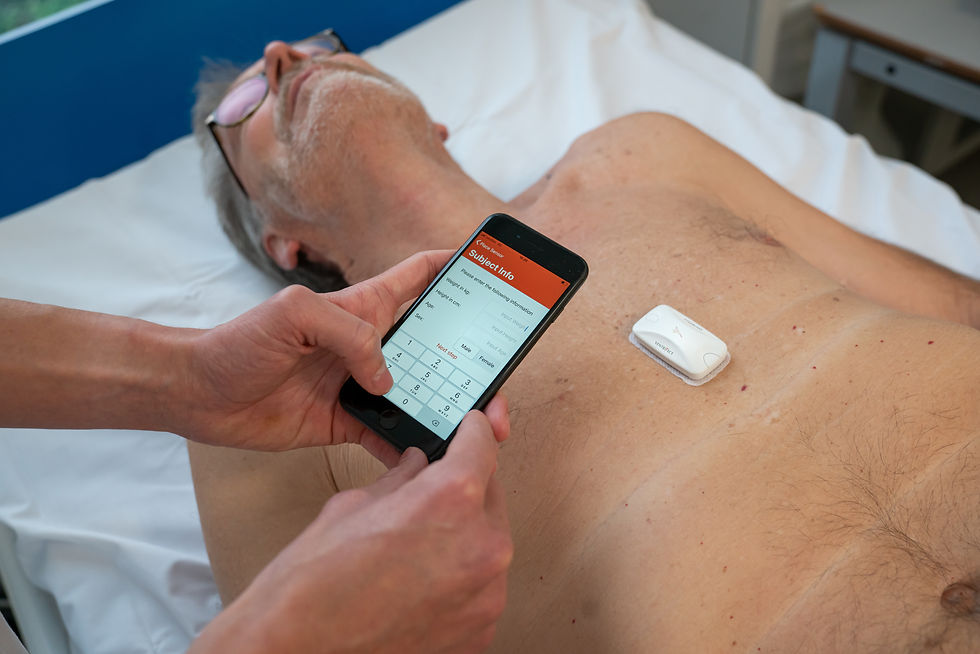
VO₂ max testing is the gold standard for cardiorespiratory fitness, but traditional lab setups are impractical for most. Seismofit offers a validated, accessible alternative:
Delivers accurate VO₂ max estimates in under 3 minutes—no mask, no running, just baseline and warm-up data78141618.
Validated against gold-standard cardiopulmonary exercise testing (CPET), Seismofit is reliable for general health assessment and ideal for wellness baselining, rehab discharge, or athlete onboarding81418.
Especially suitable for older or less fit populations, as it requires no physical exhaustion718.
Oxefit- AI driven strength platform.
OxeFit brings advanced eccentric overload training to the clinic or gym, focusing on the muscle-lengthening (eccentric) phase of movement. Eccentric training with Oxefit:
Maximizes muscle recruitment and stimulates greater strength and hypertrophy gains than traditional methods
Increases calorie burn and metabolism, supporting weight loss and body composition goals
Is particularly effective for older adults, as eccentric strength is better preserved with age and can be trained safely with smart, controlled resistance2.
Takeaway:Combining MoveFactorX’s velocity-based insights and Oxefit’s eccentric overload protocols allows practitioners to deliver highly individualized, evidence-based strength programs for aging populations.
Ready to Upgrade Your Training Protocols?
Book a free Smart Tech Audit and get a personalized plan to apply these tools in your facility.
→ Schedule Now | → Download the Buyer’s Guide

In This Issue’s Toolkit:
MoveFactorX
SeismoFit
Oxefit
What’s Next on the Podcast?
Sleep and are wearables worth the investment- Dr. Paul Jurris
Why This Matters Now
As we get older (yes, even in your 20s and beyond), we naturally start to lose strength and energy—especially if we sit more than we move. It doesn’t matter if you’re in high school, starting a new job, or just trying to feel better in your body—building strength is one of the most important things you can do for your health, confidence, and longevity.
And here's the kicker:🏋️ Lifting smarter (not harder) helps you feel better now and stay strong later.📱 New tech like sensors and smart assessments make it easier than ever to know what’s working—so you can train with confidence.
Let’s break it all down in this issue—no gym lingo, no gatekeeping, just science-backed strategies and cool tools to help you get started.
Citations:
https://www.kaeos.com/blog/eccentric-training-and-the-oxefit
https://jamanetwork.com/journals/jamanetworkopen/fullarticle/2792175
https://vbn.aau.dk/en/publications/evaluating-seismocardiography-as-a-non-exercise-method-for-estima
https://www.frontiersin.org/journals/aging/articles/10.3389/fragi.2024.1335534/full
https://www.frontiersin.org/journals/physiology/articles/10.3389/fphys.2024.1392483/full
https://www.psu.edu/news/research/story/strength-training-helps-older-adults-live-longer
https://www.t3.com/news/ventriject-seismofit-wearable-vo2-max-without-exercise
https://www.washingtonpost.com/wellness/2024/06/19/weightlifting-leg-strength-aging/
https://www.sciencedirect.com/science/article/pii/S2666337622000798
https://mcpress.mayoclinic.org/healthy-aging/the-many-benefits-of-resistance-training-as-you-age/
https://www.nia.nih.gov/news/how-can-strength-training-build-healthier-bodies-we-age
https://www.cdc.gov/physicalactivity/downloads/growing_stronger.pdf
https://academic.oup.com/biomedgerontology/article/59/1/M48/533579
https://sparkptnc.com/the-role-of-blood-flow-restriction-training-in-sports-rehab/
https://www.yahoo.com/lifestyle/wearable-measure-vo2-max-without-060028537.html
https://www.linkedin.com/pulse/innovations-senior-fitness-how-technology-3hfsc


Comments